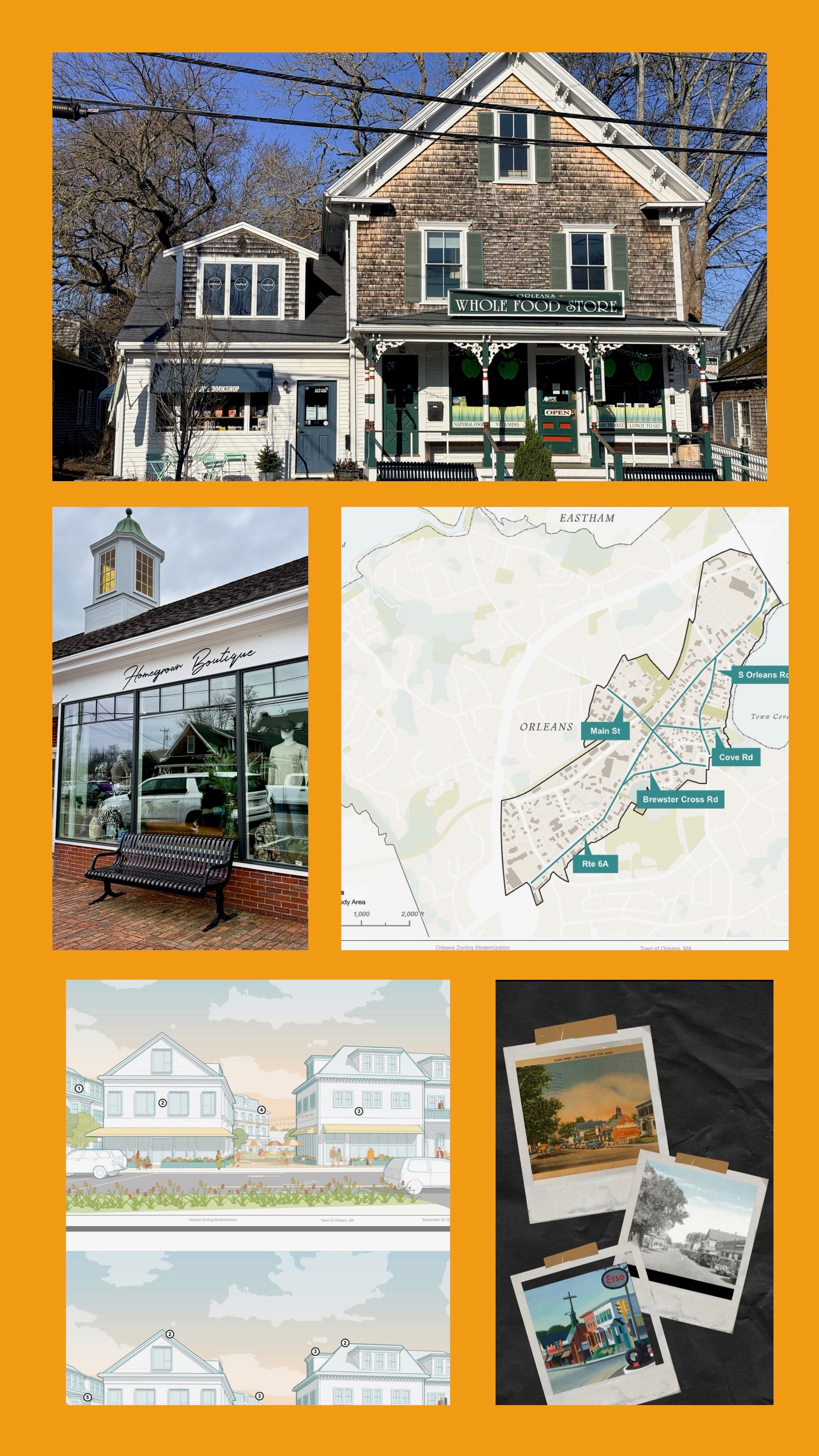
There’s so much to love in downtown Orleans. Favorite restaurants, friendly grocers and gourmet shops, beloved salons and boutiques. We've got a newly revitalized Veteran’s Park, a thriving farmer’s market, easy access to the Cape Cod Rail Trail, and the most utilized library on the Cape.
But let’s be real.
Our downtown also leaves many residents and local business owners wanting more. It’s hard not to notice empty storefronts, aging and derelict properties, street-front parking lots with confusing directional arrows (we’re looking at you, Post Office Square) plus some unfortunate impediments to strolling and biking.
Residents have expressed their desire for more vibrancy — a walkable, bikeable downtown with more restaurants, cultural opportunities, and nightlife, and attainable, year-round housing. Business owners agree, especially on housing: a 2025 survey, presented to the Select Board on 12/3/25 by Economic Development Coordinator Amanda Converse, indicates that “housing, hiring and retention” of employees is the business community’s greatest challenge.
Recent changes, including completion of the downtown wastewater collection system, a new Downtown Housing Overlay district, and new housing initiatives and developments (more on these below) remove some longtime obstacles. Other upgrades are in the works, like better signage and (in municipal lingo) “wayfinding.” There are new faces at Town Hall — and a new level of attention being paid to this extremely complex puzzle.
What would it take for downtown Orleans to be both the charming seaside village and bustling commercial hub that so many would like to see?
In this issue, EXIT 89 explores the commercial district of Orleans — its past, present, and potential future. We’ll take a look at what's been accomplished so far, what’s keeping downtown from being as awesome as it could be — and what Town Hall, commercial property owners, developers, and private citizens can do to make our downtown sing.
A Sprint Through History
For more than two hundred years — since its establishment in 1797 — Orleans has been the commercial center for much of the Lower and Outer Cape. Throughout the 19th century, hardy Orleans villagers were farming, fishing, whaling, shellfishing, and running saltworks. They traded and sold the fruits of their labors around the Cape and beyond, often via packet boats that sailed out from Rock Harbor or Town Cove.
One particularly industrious captain, Aaron Snow, built a grand six-story house in 1875 — now the site of the Orleans Waterfront Inn. He was one of our first retailers, taking orders from Cape residents for coal, grain and other necessities and sailing up and down the coast to fulfill them. His home-based business in Orleans boomed and in 1887, his son and daughter-in-law, William and Annie Snow, opened Snow’s store, the first merchant on Main Street.
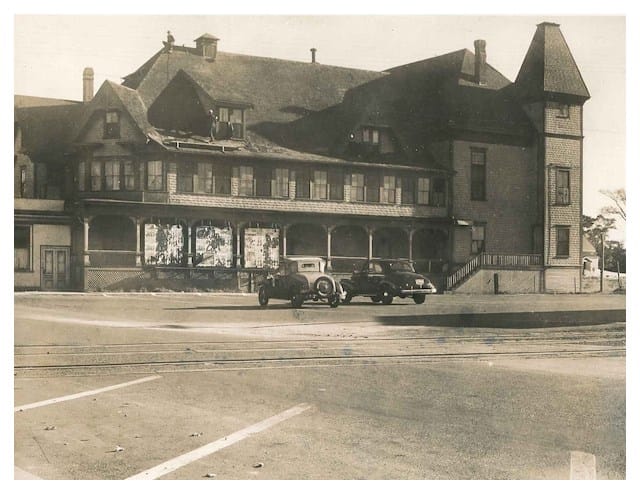
Aaron Snow also built the "Snow Block” — sometimes called Snow Hall — a large mercantile center at the corner of Main and Old Colony Way, near the railroad station and just beyond the old cemetery. For almost sixty years, it was home to multiple businesses and community activities, becoming a social hub of Orleans that at various times housed a gymnasium, bowling alley, shooting gallery, movie theater, and livery stable.
Manufacturing had also become important to the Orleans economy by then. Just a block away, the firm of Cummings and Howes erected a humming textile factory that produced 78,000 garments — overalls and shirts — in 1888. It burned down in 1905.
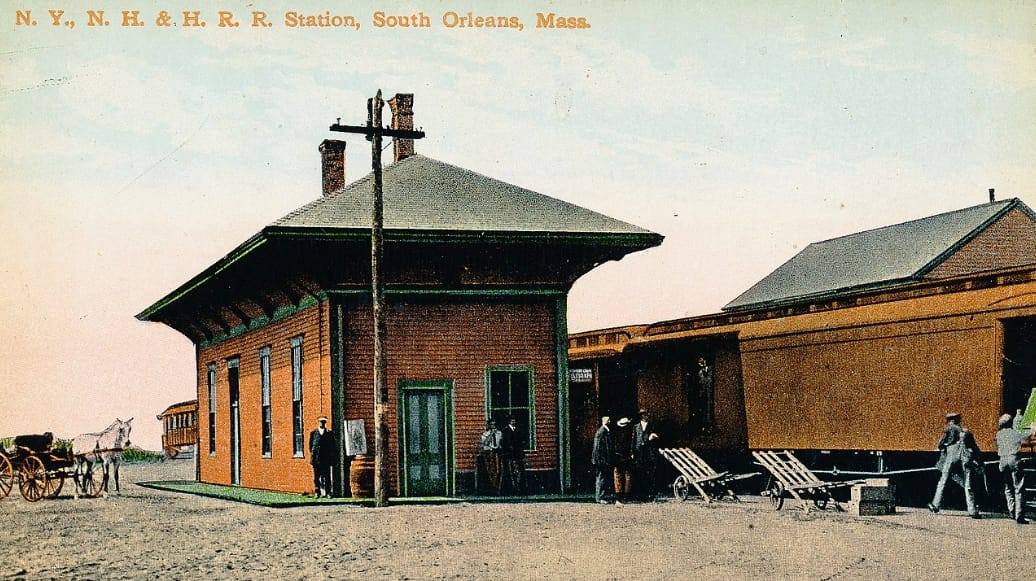
The Old Colony Railroad’s 1865 arrival in Orleans sparked major economic and cultural change. (It had reached Sandwich in 1848 and Hyannis in 1854.) Importing goods by rail was faster than by sea. Cheaper salt from the mainland and Europe sent local saltworks into decline.
Simultaneously, the widespread adoption of refined petroleum products, like kerosene, was steadily undermining the whaling industry — and hitting the economy of the entire Eastern seaboard, including the Cape, hard.
One remedy arrived via train: people. City folk began turning their attention to beautiful, breezy Cape Cod. One early tourist was Henry David Thoreau, who took a train to Sandwich and a stagecoach to Orleans. He spent the night at the Higgins Tavern (located at the current site of the Old Tavern Motor Lodge on 6A) before walking the Outer Beach — all the way to Provincetown. Thoreau’s account of his five visits to the Cape, published posthumously in 1865, became the first Cape Cod travel guide.
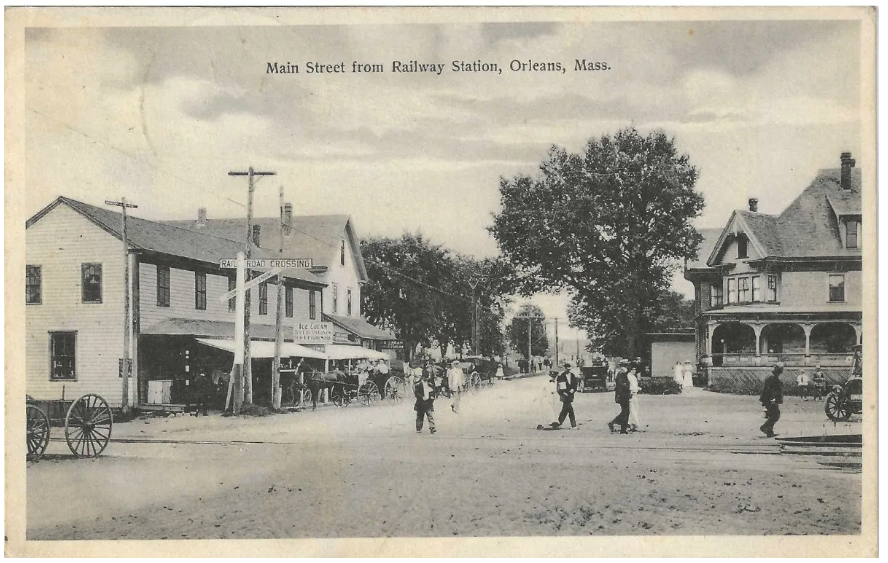
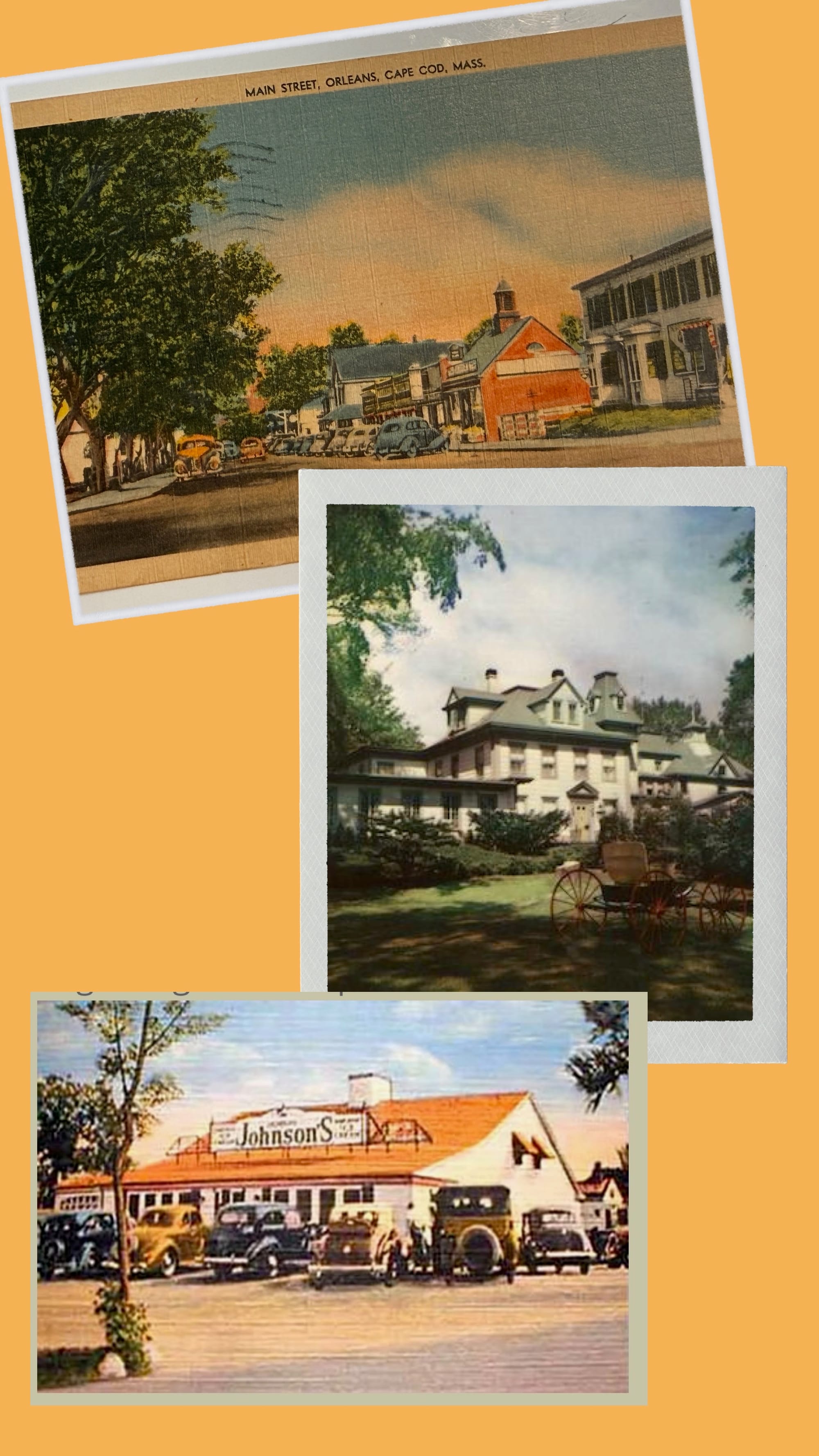
The burgeoning tourist industry meant new inns, hotels, and boarding houses in Orleans — and up and down the Outer Cape. During Prohibition (1920-1933) bootleggers kept their contraband hidden offshore in the Bay, which meant that booze, although illicit, was readily available if you knew where to go. The Southward Inn at Route 28 and Cove Road housed a popular watering hole that became a major Cape destination in the 1920s, with renowned chefs, murals painted by Peter Hunt, and a parrot that chatted up customers. Its Carriage Room, in operation for five decades, was a well-known jazz venue and the inn also hosted popular Friday-night square-dancing.
Meanwhile, the automobile was becoming a ubiquitous feature of American life — and enabling even more visitors to access Cape Cod. In 1935, the opening of the two major bridges over the Cape Cod Canal brought cars and trucks and ever more goods and people to Cape Cod — and auto-centric changes to towns like Orleans: motels, drive-in restaurants, parking lots, and sprawl. The post-war years saw the spread of cottage colonies and vacation homes.
America’s first franchise of Howard Johnson’s iconic Quincy restaurant opened that year in Orleans at the intersection of Routes 28 and 6A. Under its famous orange roof, HoJo’s served over 700 meals a day in the summer of ‘35, not counting ice cream orders. A special for 50 cents got you soup, a choice of entree, hot rolls, juice, dessert, coffee, milk or tea. If you were splurging, the lobster dinner was a buck fifty.
The Cape Cod National Seashore was established in 1961, attracting even more motor tourism, spurring the construction of even more vacation homes, and furthering Orleans’ transition to a seasonal economy — with most local businesses enjoying a frantic feast of commerce during the summer months and suffering a relative famine for the other nine months of the year.
The construction of the Cape Cod Mall in 1970 dealt a blow to local shops Cape-wide, as did the arrival of “big-box” stores throughout the 1980s and 1990s, and the rise of online commerce in the 2000s. This left Orleans, like most Cape towns — and indeed, towns across America — with an extremely challenging landscape for local retail, and a downtown that struggles to meet its potential.
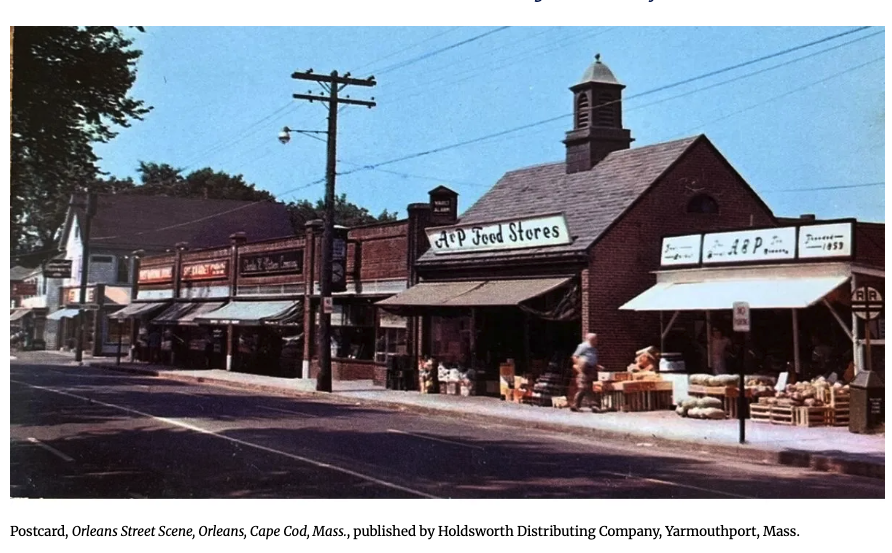
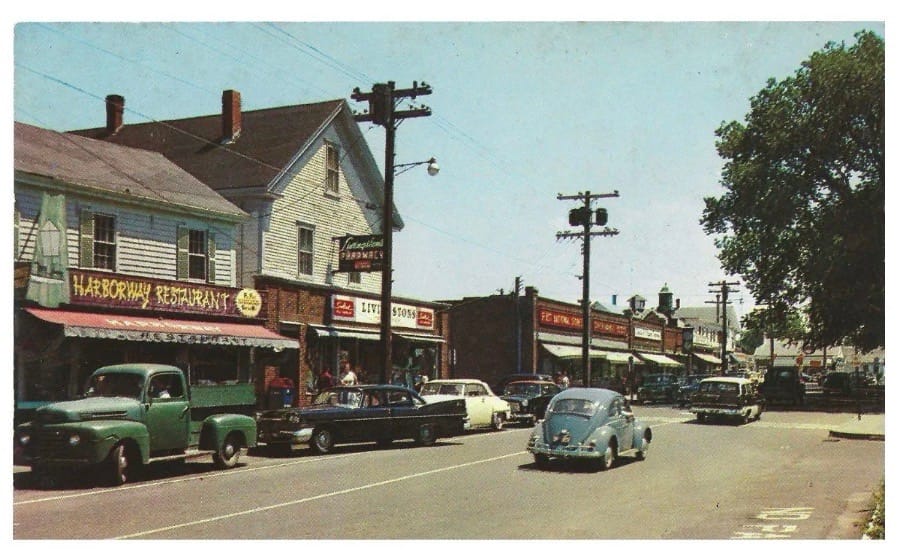
Longtime residents and commercial property owners interviewed by EXIT 89 for this issue described waves of downtown “improvements” over the last fifty years. They remember old donut shops that came and went: Flemings, Krummy’s, and Sunrise. They remember when Land Ho! was Ship Ahoy Grille and how the old Southward Inn glowed with life at night. They remember Livingston’s Drugstore with its lunch counter, Chester Robinson’s Five & Dime, Scott Barron’s eclectic Head & Foot Shop, and the old Orleans movie house.
They remember the arrival of the first brick sidewalks in the 1980s, and when “suddenly” all the street parking on Main Street was removed to create four lanes for traffic. That “improvement” only lasted a few months, before a Special Town Meeting was called and residents voted for a return to the way it was.
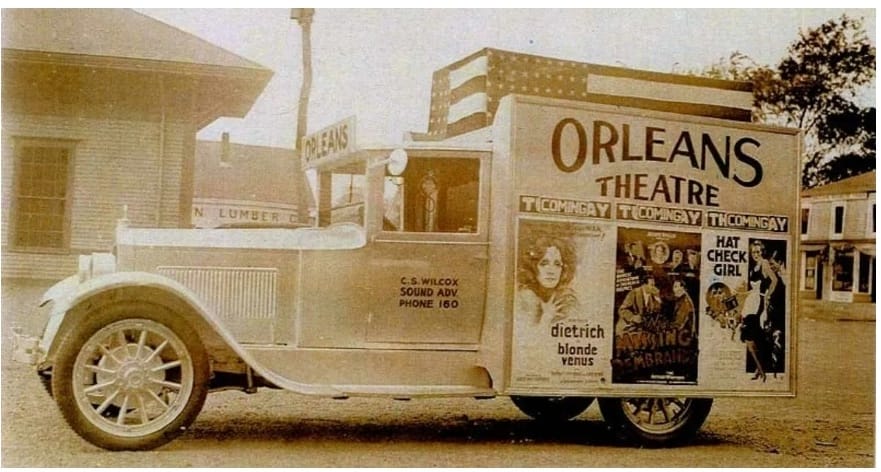
The Southward Inn was torn down in 1977, making way for a new Bank of America branch. The Orleans HoJo’s closed two years later, becoming Adam’s Rib, The Fogcutter, Coast, and now Lost Dog Pub. The beloved Orleans movie theater on 6A, opened by the Wilcox family in 1939, operated for fifty years with various owners before becoming a CVS. People fondly recall seeing Star Wars and Jaws there in the 1970s. Some recall how later on, hamstrung by the advent of cable TV and VCRs, the cinema turned to adult movies to stay afloat.
In 1999, when Scott Barron closed his Head & Foot Shops across the Cape (the location in Orleans is now Main Street Wine and Gourmet)— he told the Cape Cod Times: "I still love retailing, but it's become impossible for me to turn a profit because of the seasonability of the business, and we're at full employment. You can't find anyone to work unless you pay top dollar. My prices haven't gone up, but the costs have, incredibly."
Sound familiar?
Different decade, same challenges.
What's On Your Wishlist?
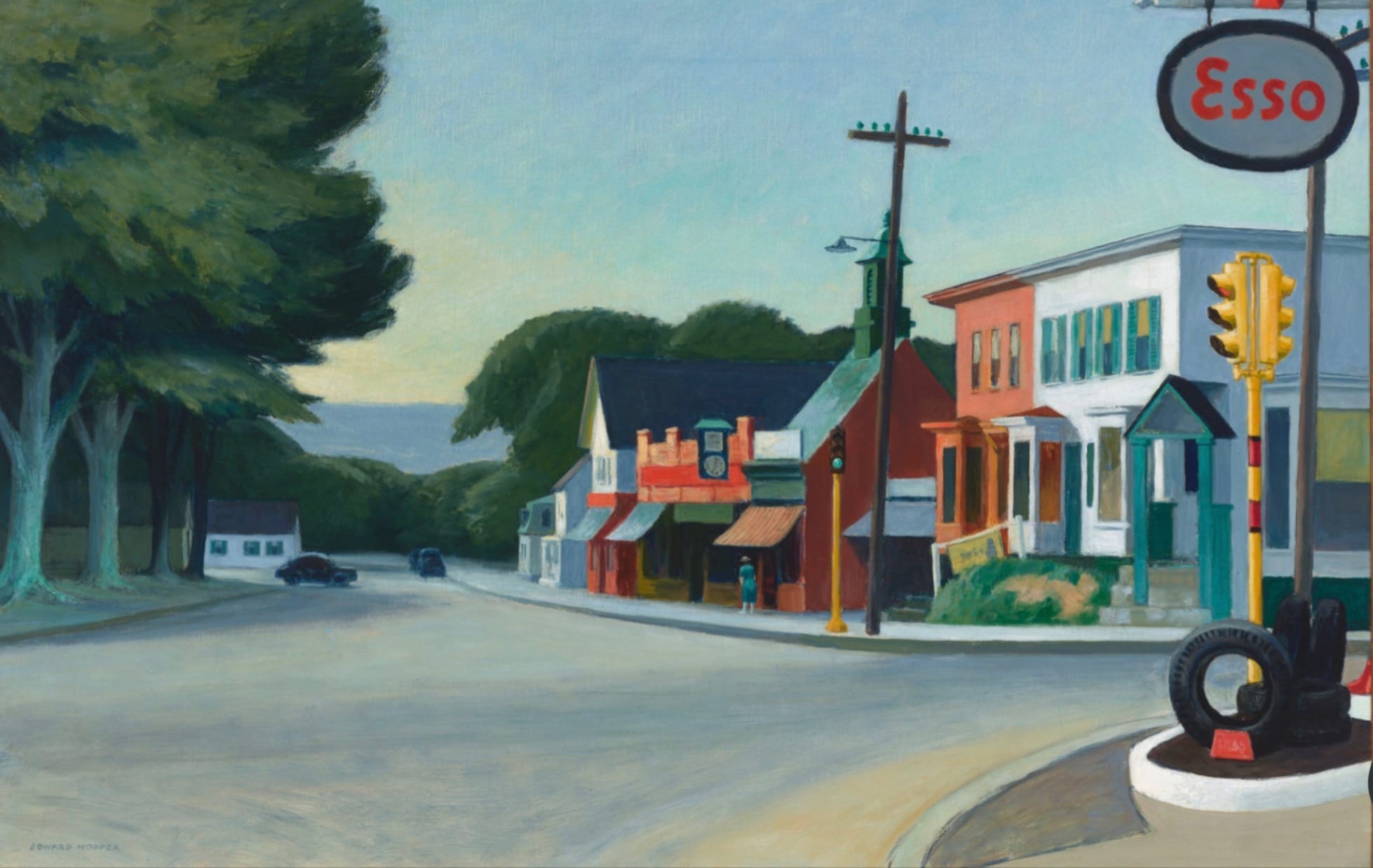
It’s hard to find an Orleans resident, commercial property owner, or local merchant who doesn’t have a wishlist for downtown.
“I’d like it to be more walkable,” says Janis Brennan, who founded Orleans Whole Food Store in 1975 with her husband Don Krohn. “More than that, I’d like it to be a place where you want to spend time every day, and other people do too. There would be spaces for that, for gathering and hanging out. Where we could run into each other.”
“We need more and better restaurants,” says Bob Sparrow, who moved permanently to the Cape in 1980, and opened his first Sparrow coffee shop with his wife Marje in Orleans in 1993. “I think we need a community center too. A place for everybody.”
“Doesn’t Orleans need a big, sizable hotel?” Select Board member Kevin Galligan asked at the meeting last December when Amanda Converse gave her presentation. “Key to bringing people here, a big venue?”
“I’d like to see the Mobil gas station go away,” says Don Krohn. “It was a bad decision by the Select Board decades ago and somehow we are supposed to live with it forever. I think Town Hall has been too timid. They could take properties whenever they want, properties they have better uses for. Imagine what a park would do there,” he says. “Almost anything would be better.”
Many share a fantasy of a cozy, old-timey Main Street, the way things were in “the good old days.” Mary Wright, a member of the Orleans Planning Board (and candidate for Select Board Member in this May’s Town election) who spent summers here as a girl, cherishes her memories of the Southward Inn and seeing Jaws on 6A. “But,” as Wright says, “nostalgia is not a strategy.”
She also notes that on a deeper level, people’s wishes for downtown aren’t too dissimilar. “I think we want a downtown that offers experiences we can’t get online — lectures, food, music, classes, movies. People want Orleans to be a community gathering place — an economic and cultural center for the Outer Cape.”
The Word on the Street
Of the 100 or so respondents to the 2025 Orleans Small Business Survey, about half of the merchants describe Orleans today as “business-friendly.” Respondents cite its natural beauty, sense of community, and high quality of life as its biggest benefits. Their top priority for Town: reinforcing and promoting Orleans as the commercial hub of the Outer Cape. They also favor protecting our natural resources to sustain tourism, increasing housing density in downtown, and creating safer pedestrian and bikeways connecting commercial and seaside areas.
Emily Richardson, owner of Homegrown Boutique on Main Street, says she loves being an Orleans business owner, especially with her new location in the heart of downtown. “Orleans is a special place to be a business owner,” she says, thanks to its central Cape location and spectacular beaches. It can also be hard, due to the extreme seasonality of the economy, which Richardson says makes her appreciate year-round customers even more.
“Those regular, year-round customers keep businesses like ours going," says Richardson. "Small businesses are part of what gives Orleans its character, and the year-round support from our community is what keeps that spirit alive.”
How could Town help? Richardson hopes Orleans will continue to promote itself as a destination, and also improve its signage — or “wayfinding.”
“Clearly highlighting where parking is, and directing visitors to shopping and dining areas would make it easier for people to navigate and explore downtown — and help more visitors discover our local businesses,” Richardson says. She also wishes some restrictions were looser. “Things like outdoor dining, small gatherings, or ‘sip and shop’ events bring great energy to downtown and help draw people in. I’d love to do even more.”
Brian Junkins, who bought Friends’ Marketplace in 2016 from his dad, has similar thoughts: “I think the Town needs to invest in critical infrastructure, including parking, in order to inspire business owners to invest.” He also notes the challenges presented by our seasonal economy. “Dealing with the pressures of extreme fluctuations in demand and workforce availability, combined with the local economic need of providing year-round work that pays a wage high enough to support the cost of living in the lower Cape is a tough ask for many,” he says. “But other desirable coastal communities have made investment happen.”
Junkins would like the Town to explore how those communities have done it — and maybe see “some sort of incentive program to help ease the burden of investing in such a seasonal and expensive (in terms of construction and lease cost) location.”
According to the survey’s results, there's a serious need for more modern, attractive, high-quality, turn-key commercial space. As Elizabeth Jenkins, Assistant Director of Planning and Community Development, puts it, “Right now, the landscape of vacant commercial space is just not great for luring new business to Orleans.”
Other challenges cited in the 2025 survey include hiring, access to capital, the lack of broadband internet, and disruptions caused by construction. Amanda Converse summarized the situation: “Businesses are stable, but Orleans is not reaching its full potential.”
Let's Talk Potential
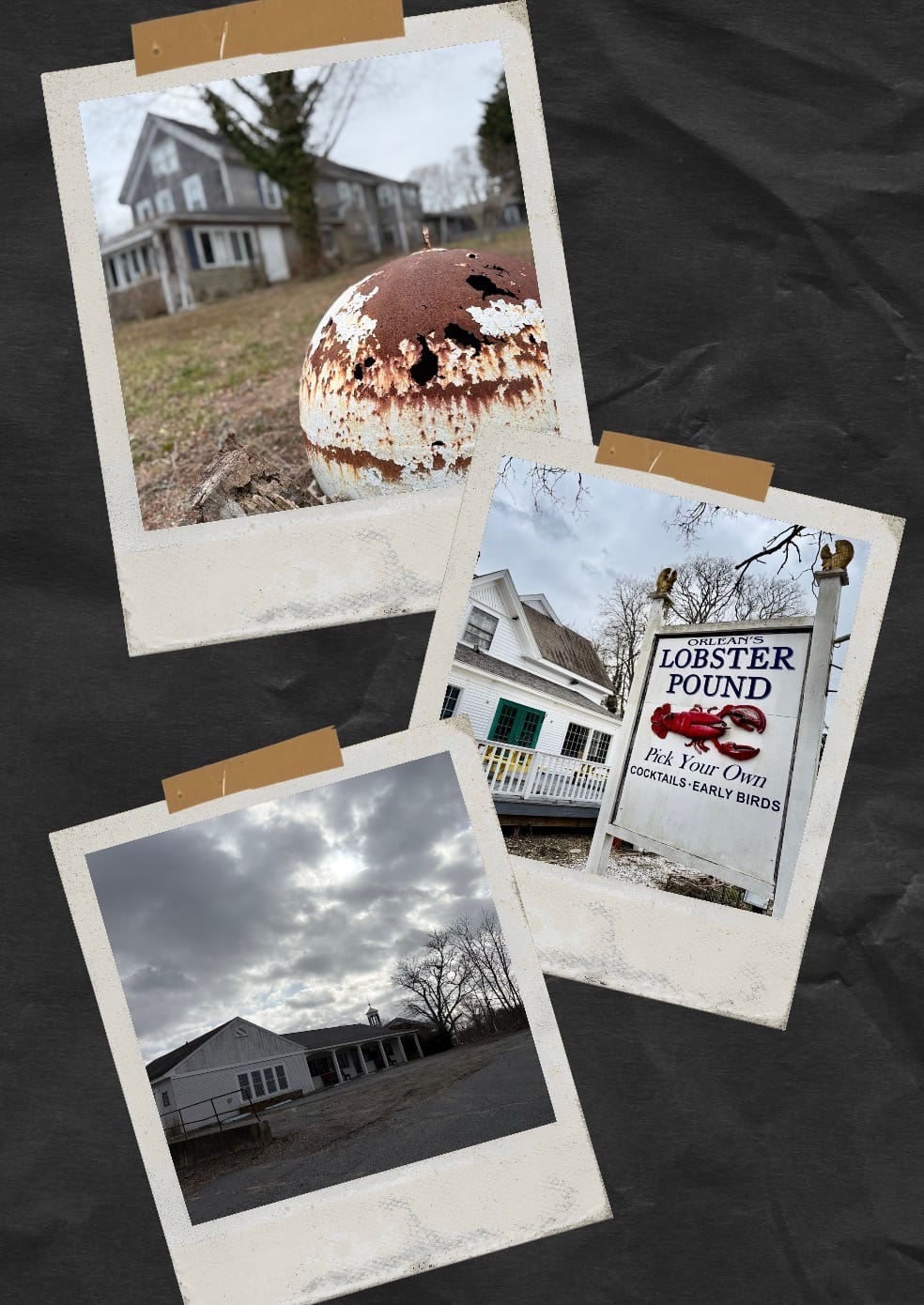
If you’ve spent any time in downtown Orleans, you’ve likely wondered about the empty storefronts, vacant buildings, and deteriorating properties. The reasons for this are various — and can be difficult to address. For starters, the properties are privately owned. If an owner decides not to use their property, or even keep it up, that’s their prerogative. The Town of Orleans has no mechanisms to force property owners to use or maintain their property.
“We aren’t the taste police,” says Orleans Building Commissioner Davis Walters. “Health and Life Safety are our primary responsibilities. Health and Housing Codes are also there to protect the public, typically for tenants who are renting. If we” — the Health or Building departments — “receive a complaint, we are obligated to follow up. But if, for example, a commercial building is found to be disused or neglected, even unkempt and ugly, but tight to the weather — no crumbling sidewalks or flying shingles that might be a hazard to pedestrians — there’s really nothing in the building codes or zoning regulations mandating official action.”
As for eminent domain – the seizing of a property by a government because the property is underutilized, an eyesore, or there’s simply a better need for it — “it’s not something that Orleans is inclined to do,” says Andrea Reed, who moved to Orleans in 1998, when downtown was “truly terrible,” and served on the Planning Board prior to becoming a Select Board member in 2020. “Eminent domain is wildly expensive in legal fees and creates tremendous ill-will.”
Local property owners describe various reasons for not investing in their properties — overly strict building and zoning codes, the capital spent on wastewater connection, the high cost of construction, lack of available capital, the costs and taxes incurred by selling, and plain old lack of interest top the list — but the results are the same: underutilized, and sometimes unsightly, properties.
Will this change?
Not until commercial property owners decide they want it to.
While some told EXIT 89 that they intend to hold onto their properties indefinitely without investing in it, others say they’d like to expand.
Junkins, for one, has big ideas for the future of Friends’ Marketplace. “Nothing is set in stone,” he says, “but whatever we do will involve Friends’ continuing to be even more of a community destination centered around food — involving more meal options, social gatherings, cooking classes, wine events, and maybe a food production/sampling space that could support local food startups, and more.”
Todd Thayer, the town’s largest commercial property owner (his holdings include Orleans Marketplace, a.k.a. “Staples Plaza,” the Art Cottages at Orleans Market Square, the CVS and Hilltop Plaza on Route 6A, and recently, the strip between the Mobil station and Santander Bank) has long wanted to see zoning changes that would allow greater density and more mixed-use development downtown. He presented detailed plans at an Orleans Citizens Forum event in 2016, describing a mixed-use project that included 150 new apartments, even lobbying Town for an overlay district.
That approach was finally embraced last fall, when voters at Town Meeting approved the new Downtown Housing Overlay District, which changes our zoning bylaw to allow for a denser, mixed-use commercial area with considerably more housing. (We’ll get to the Overlay in a bit, and describe what the new zoning makes possible.)
One factor in the lack of investment in downtown, according to many long-time business owners: Orleans has not always been the most business-friendly environment. They describe years of frustration with notoriously strict building codes and difficult inspectors, and Town Hall’s perceived hands-off approach to growth.
This is no longer true, these owners say. Orleans has entered a new era, and Town Hall is making concerted efforts to rebuild trust and remove obstacles for local businesses. ”Downtown is a priority for us,” Town Manager Kim Newman told EXIT 89, “because it’s both the heart of the community and a key part of our local economy. We’re focused on making it more connected, more welcoming, and supportive of the businesses that make Orleans what it is.”
To that end — in collaboration with our current Select Board, and in accordance with the 2022 Economic plan — several new positions in Town Hall have been added that focus on planning, special projects and economic vitality.
Amanda Converse, for example, in her role as Economic Development Coordinator, is a resource for property owners and developers, helping them navigate Town rules and regulations. She also spends time talking to local business owners, trying to figure out what support they need to thrive. This has included technical assistance and small business grants. She’s in ongoing conversations with prospective businesses, some already operating in other Cape towns, hoping to recruit new merchants to open a “brick-and-mortar” in Orleans. (She is working on a new website for current and prospective business owners, and publishing two newsletters: Orleans Business Connection newsletter and “Town Talk.”)
“There’s been a lot of thoughtful work over the years around downtown Orleans with plans, studies, and community input about what people want to see here," says Newman. "What’s exciting now is the opportunity to start turning that into action.”
Judy Lindahl, the Executive Director of the Orleans Chamber of Commerce, agrees it’s a new day for collaboration between the local business community and Town Hall. “We have a growing public-private partnership,” she says — it takes both entities to make change happen. It was Lindahl, for example, who got a call about Baskin’s Ace Hardware being interested in a bigger space. She played matchmaker — and now the former Christmas Tree Shops property is an expanded Ace Hardware instead of a Dollar Store.
Several other community partners and Town committees are hard at work. The Community Development Partnership (CDP) has been granting micro-loans for expansion, equipment, and working capital to small businesses in Orleans and across the Lower and Outer Cape since 1992. The Orleans Economic Development Committee advises the Select Board on initiatives, policies and programs to help strengthen local businesses and year-round vitality. The Community Preservation Committee (CPC) has supported many projects downtown, including Veteran’s Memorial Park, and is funding the major upgrades to Eldredge Park that will begin this coming fall.
And since 1986, the Orleans Improvement Association (OIA) has spent well over half a million dollars, much of it in the commercial center. OIA’s accomplishments are almost too many to list, but include the brick sidewalks, benches, bike racks, planters, and holiday decorations on Main Street, the design and landscaping of Parish Park, plus landscaping, signs, picnic tables and much more on the Orleans Village Green and Depot Square.
A new Snow Library has been the focus of strategy sessions, feasibility studies, public hearings, and a state grant application that failed due to Orleans being too wealthy a town based on state metrics. While the Library Trustees continue to work with the Friends of Snow Library on fundraising strategies, ultimately whether or not a new library — or any other new capital project — gets built will come down to Orleans citizens, Town Hall leadership, and recommendations of the Finance Committee. With so many competing infrastructure projects and major expenses and debt looming — the Fire-Rescue building, and the continuing wastewater project, for starters — Orleans needs to sort out its priorities and create a realistic timeline for getting them done.
Whatever the future holds, we’ve already made major progress downtown — resulting from years of hard work and investment on behalf of residents, volunteers, and Town employees.
Let’s have a look at accomplishments so far:
1) Wastewater: This is a big one. Phase One of the plan, connecting 306 downtown properties to the Wastewater Collection Facility on Overland Way, was completed in February 2023, with property owners being given a year to connect, and then an additional year. While the construction, turmoil and traffic detours were maddening for many, as were the costs that property owners bore to connect, the future of Orleans depends on keeping nitrogen from septic waste out of our ponds, coves, and open coastline. In terms of vitality, the new wastewater system opens up the possibility of more housing, more dining, and maybe even more, bigger hotels.
2) Wayfinding and Streetscapes: To enhance pedestrian, bicycle, and car navigation, The Cape Cod Commission worked with the Orleans Planning Board in 2021 to develop a comprehensive wayfinding plan for downtown Orleans. The final study, “Orleans Complete Streets,” recommends new signage, landscaping, and technological improvements, including a wayfinding plan that focuses on improving information and access to key destinations — from the beaches and the Cape Cod Rail Trail, to parking, public bathrooms, and the commercial downtown area. Along with a new push to complete those goals, the Orleans Transportation and Bikeways Advisory Committee is working on making all commercial areas safer places to walk and bike. Stay tuned for developments on these fronts.
3) Housing: A massive effort to grow our supply of attainable housing over the last decade is beginning to bear fruit. Last year, Orleans saw the opening of 62 housing units at Phare on West Road (formerly the Cape Cod 5 operations center), along with 14 new units at 107 Main Street. Seventy-eight more units are planned for the old Governor Prence properties on 6A, with demolition of the old motel slated to begin in a few weeks.
Why is housing so crucial to the economic health of Orleans, and the vibrancy of downtown?
Orleans businesses — along with schools, fire and police departments, and other services — need employees. But our sky-high price tags for local real-estate and rent prevent many people from living here. (For more on this, check out EXIT 89’s 2021 Deep Dive into Orleans’ Housing Crisis.) With more attainable housing, more working people would be able to afford to live in Orleans, easing hiring and retention and boosting year-round commerce.
So, have we built enough housing yet?
The lotteries at both Phare and 107 Main Street suggest we haven’t. Phare received over 600 applications for 62 units, and 107 Main Street received about 500 applicants for 14 units, indicating there’s still a whole lot of need. Meanwhile, we are steadily hemorrhaging young people and families — and not attracting new ones because they can’t afford to live here. The Select Board has committed to a goal of 350 new residential units by 2034 — 150 deeded for lower-income residents and 200 that fit the description of “missing middle” housing, which Town planners expect to be located largely throughout downtown — thanks in part to the newly-adopted Downtown Housing Overlay District zoning bylaw.
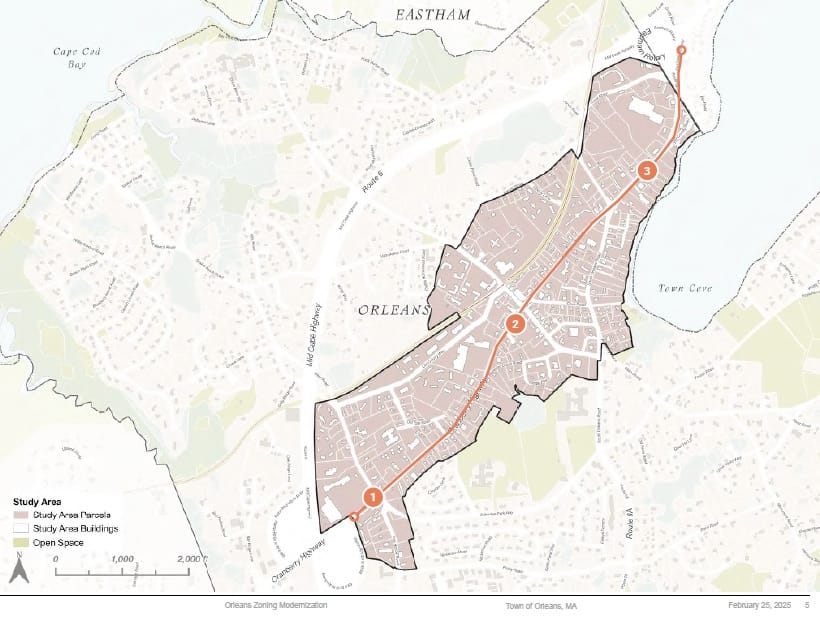
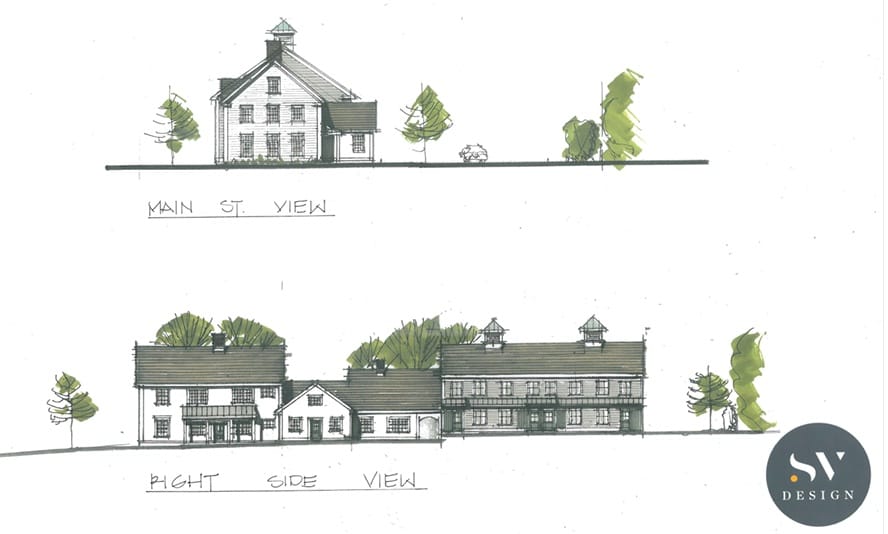
4) The Overlay Zoning Bylaw: This new zoning bylaw is an optional zoning and building code that applies to the properties on both sides of 6A, stretching roughly from Skaket Corners to the Eastham line, and the length of Main Street from La Bella Vita Restaurant to Snow’s Home and Garden and Mid-Cape Home Center (see illustration above.) The purpose of creating the Overlay District is to encourage more investment in the now-sewered downtown, specifically by allowing more and denser — and, in some cases, taller — housing in Orleans’ commercial core. The bylaw also moves parking away from the street, adds more green space, and aims to make downtown more pedestrian- and bike-friendly, and generally more cohesive.
In a nutshell: Orleans is allowing more concentrated development, including more housing, to make the development of commercial property more financially attractive to property owners.
Neglected and underutilized properties around town could begin to draw interest. Their owners, who may have been hesitant to sell, could decide now is the time. Or, maybe they decide to invest in their property — and in Orleans — because now they can get more bang for their buck. In the next five to ten years, those investments could yield a refreshed, fuller, livelier downtown, with more housing — especially for year-rounders — without tapping the taxpayer well.
Got some questions?
EXIT 89 did too.
Will downtown be unrecognizable in 5-10 years?
Not likely. According to Elizabeth Jenkins of the Orleans Planning and Community Development Department, much of the housing that could be built would be "infill" development. “Most properties are not a blank slate,” Jenkins says. “They already have buildings, units, businesses, etc. The new overlay zoning likely allows opportunities to build on what's there.”
She explains that a major goal of the zoning overlay was to promote "missing middle" housing — potentially “smaller-scale projects that might happen behind an existing building, or as an addition, etc.” She and her team are creating a "catalogue" of missing-middle housing types that owners can review and to see if they would be a fit for their property. “It will include detailed designs and even unit layouts,” Jenkins says, and will be ready by the end of June.
In terms of larger-scale redevelopment, Jenkins says there are just a “handful” of properties that could “max out” — or “fully realize the development potential envisioned by the overlay — with smaller-scale, mixed-use buildings close to the street, and larger-scale residential development set behind them.”
Due to the high cost of construction, properties with a low FAR (floor-to-area ratio, in developer-speak, meaning the ratio of a building’s square footage to its lot size) may be most attractive for comprehensive redevelopment, she explains. These tend to be properties with relatively small buildings and large parking areas. Jenkins also points to properties with buildings that were constructed post-WWII and before 1980 — which tend to have less historical character and lower-quality construction — as other good opportunities for investment.
If developers decide to build and opt in to the new code, 50 percent of housing units they build inside the Overlay would be restricted to year-round tenants, but at the same time they're allowed more units than without the new code. There are income restrictions, too — and incentives for developers who apply them to more units than mandated.
Could downtown become a concrete jungle?
Also no. In addition to moving parking out of sight of the street, the bylaw includes green and open-space requirements for new buildings, so sitting areas and small parks and gardens would be part of any new design.
What about our “seaside village” vibe?
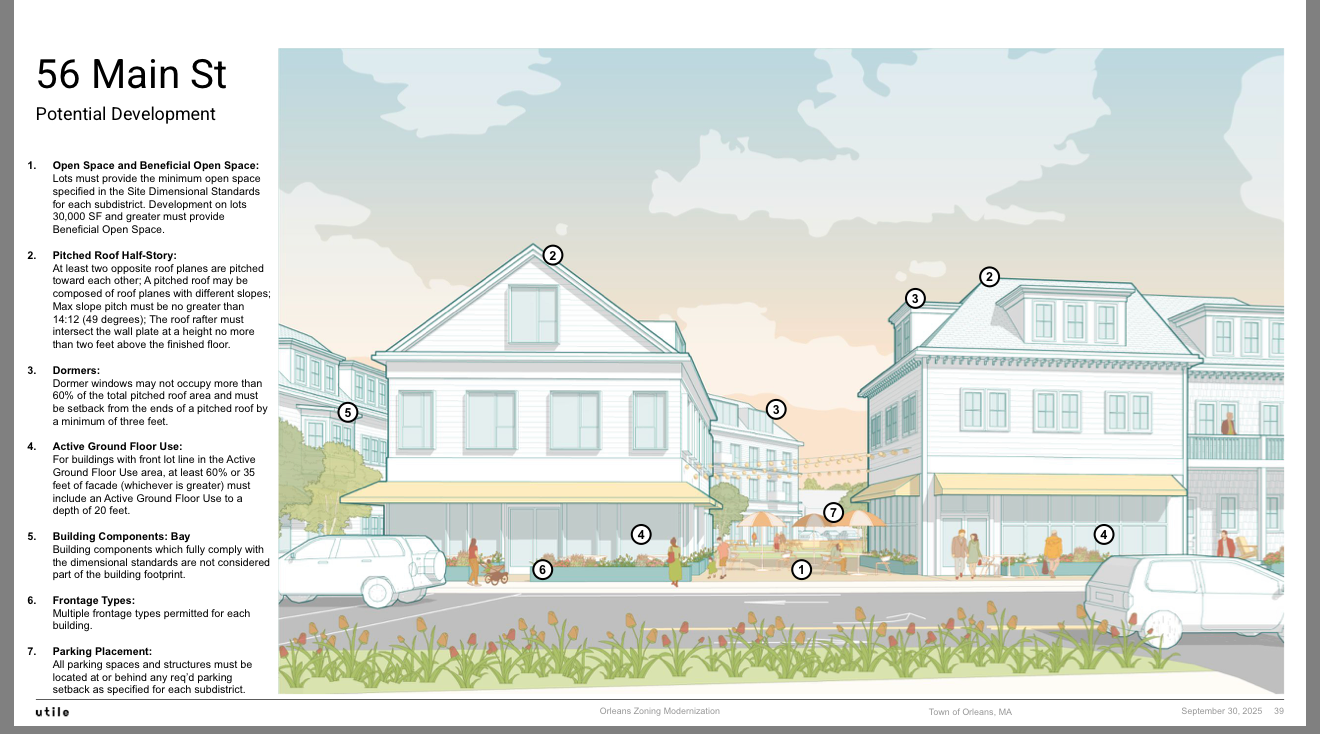
There are extensive design guidelines in the bylaw, drawn from architectural characteristics that Orleans residents have said they value most, including pitched roofs, architectural trim, front porches, dormered half-stories. (Fun fact: the downtown structure most cited as ideal, visually, is the Orleans Whole Food Store.) Another important element to support the “village” feeling: moving parking to the back of buildings, and bringing buildings closer to the street. If you want to drill down on the why’s, where’s, when’s and how’s, take a look at Elizabeth Jenkins’ excellent and clarifying September 2025 presentation to the Planning Board.
Who might take advantage of the new code?
Amanda Converse does not expect to see “massive, corporate developers” buying up lots. Instead, she describes individuals who already own property in downtown Orleans as most likely to take advantage of the Overlay.
“They’re people who see Orleans and the community as somewhere they want to be,” she says, “or where they want their dollars to be. People who want to support our year-round workforce, who want our small businesses to thrive, and their employees to live here.” She envisions a bustling, inhabited downtown. “Sure, there’s shopping, but there are also homes. Lights on all year ‘round.” Ideally, redevelopment — improvement and investment — will be “contagious,” says Converse, and development will snowball.
Could Orleans be poised for a new Golden Age?
Maybe.
If all this sounds a tad speculative, that’s because it is. The success of the Overlay District — and to some degree, the future development of downtown — lies largely in private citizens’ hands. What they choose to do with it — and when — isn’t something the Town, or anyone else, can control.
“What the Town can do,” Converse says, “is set the table for a really good feast.”
Brian Junkins is one business and property owner who would like to double-down and further invest in Orleans, despite the not-insignificant headwinds. But he wants to be sure business owners aren’t bearing the whole burden on their own.
“Business owners here are putting everything they have into their operations,” he says. “They are living and breathing it, day in and day out, and there is no guarantee for success. That’s stressful. The thing is, their willingness to put themselves out there is the one thing we need in order to create the foundation for our town’s growth and overall economic health.”
He says a “true public-private partnership” between the Town and Orleans community will be necessary to bring about real change. “We need to have an ‘all in it together’ mentality from a town perspective, a business community perspective, and a residential community perspective, if we have the goal of making this a vibrant, livable, year-round destination.”
So…right now the picture of downtown we see in the crystal ball is still pretty fuzzy. But EXIT 89 will be checking back in with all things downtown and, as always, keeping you in the loop.
What Can You Do?
If you’ve got ideas about downtown — or a wishlist of your own — and feel like you’ve been standing on the sidelines, there are plenty of ways to get involved:
- Join a Planning Board meeting
- Volunteer for a Board or Committee; here are current vacancies
- Take the time to understand the Downtown Overlay District
- Watch the March 27 recording of the Orleans Citizens Forum’s discussion of downtown
- Head to Main Street for Arts Week, April 18-25, 2026
- Orleans Chamber of Commerce has a great events calendar
- Orleans Improvement Association (OIA) is always looking for members and support
- Make a donation to Community Development Partnership (CDP)
- Hop on the bandwagon for a new Snow Library
- Listen to the November 6, 2025 episode of the Orleans: Behind the Scenes podcast about the future of downtown
- Listen to a conversation with Amanda Converse and Elizabeth Jenkins on The Cape and Islands Podcast
- Business folk: Sign up for the “Orleans Business Connection” newsletter
- Sign up for Amanda Converse’s other newsletter, Town Talk
- Go to Annual Town Meeting on May 11 — we promise it’ll be fascinating!
- Shop Local: Support local businesses year round; First Fridays start in June
- Read Local: Forward this issue of EXIT 89
Keep an eye on your inbox!
Our next issue is a preview of the May 11th Annual Town Meeting.
Acknowledgments
A hearty thank you to the many sources and contributors to this issue, including Janis Brennan, Amanda Converse, Maury Feigenbaum, Alex Fitch, Brad Hinote, Elizabeth Jenkins, Brian Junkins, Judy Lindahl, Don Krohn, Shirley Lutoff, George Meservey, Kim Newman, Andrea Reed, Emily Richardson, Bob Sparrow, Todd Thayer, Davis Walters, Mary Wright. For context, we relied on The Centers for Culture and History in Orleans and the local history reference stacks at Snow Library, particularly Ruth L. Barnard’s A History of Orleans, Daniel Lombardo’s Orleans, William P. Quinn’s Orleans: A Small Town with an Extraordinary History and The Saltworks of Historic Cape Cod, along with Russell R. Jalbert’s Where the Sea & History Meet, Nate S. Gibson’s Eastham website photo collection, and images from H.K. Cummings Revisited, 1887-1905, in the Collection of Snow Library.

EXIT 89 is an independent publication. Our mission is to help Orleans voters make sense of town issues by providing a clear and impartial overview of the latest developments. We want to help fill the information gap, reduce the "mystery" of Town Meeting, and promote vibrant civic engagement.
Our hyperlocal digest is researched and written by journalists Martha Sherrill and Emily Miller. Elaine Baird and Lynn Bruneau are the founding advisors. Additional research and writing is provided by Steve Gass. We are all residents of Orleans. Editing, infographics and tech support are provided by Kazmira Nedeau of Sea Howl Bookshop.
Our digest is 100 percent free — and we aim to keep it that way. But your donations keep us going. You can donate securely online by clicking here. Or you can send a check to "EXIT 89" and save us a processing fee. Our address is: EXIT 89, P.O. Box 1145, Orleans, MA 02653.
As always, we’d love to hear from you. Please share questions, comments, and ideas for future issues at hello@exit89.org.
If you are new to EXIT 89, please take a moment to sign up for a free subscription. And if you’ve been here a while and enjoy it, please forward to a friend.
As always, thank you for your support!