Preview of Special Town Meeting — November 16, 2026
Issue No 36 — Our Preview of Special Town Meeting takes a look at Warrant articles that propose zoning bylaw changes, new emergency generators for the Council on Aging and the Water Treatment Plant, a study of Pochet Marsh's self-cleaning abilities, and a Citizen Petition.
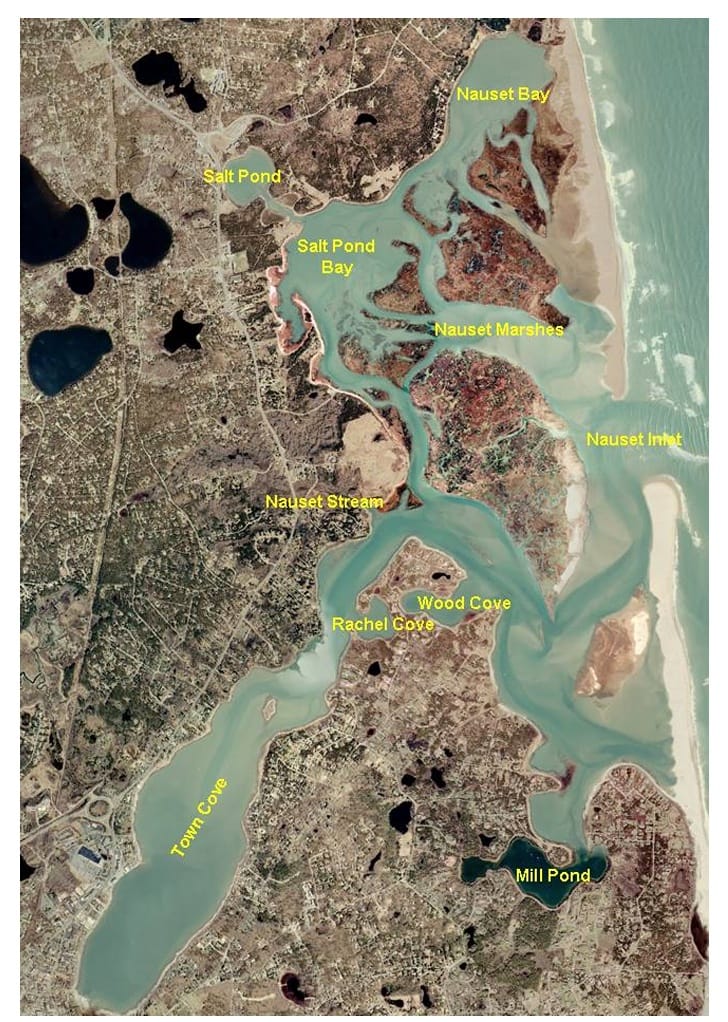
Wood Cove, part of the Nauset Estuary System (see map below)
How glorious is fall on Cape Cod this year? The trees are positively ablaze! But why not take a short break from leaf-ogling and dig into a little Special Town Meeting prep with EXIT 89?
Residents will be casting votes on 22 Warrant articles that include: zoning bylaw changes, new emergency generators for the Council on Aging and the Water Treatment Plant, and a Citizen Petition.
VOTING — it’s a right, a privilege, and a duty. It’s been top-of-mind lately for many of us. Grateful for a break from national political ads, anyone? Here’s your chance to turn off the boob tube and tune in closer to home.
While we’re on the subject voting: Did you know Orleans had a 70 percent turnout for last week’s state election? Rather impressive, right? Last spring’s Town Meeting drew only 10 percent of Orleans’ registered voters. Hmmm. Some pretty important stuff goes down at Town Meeting — stuff that affects your daily life, and that you can’t weigh in on unless you’re there.
We’d love to see Orleans hit 15 percent attendance next Monday night — or gosh, maybe 20?
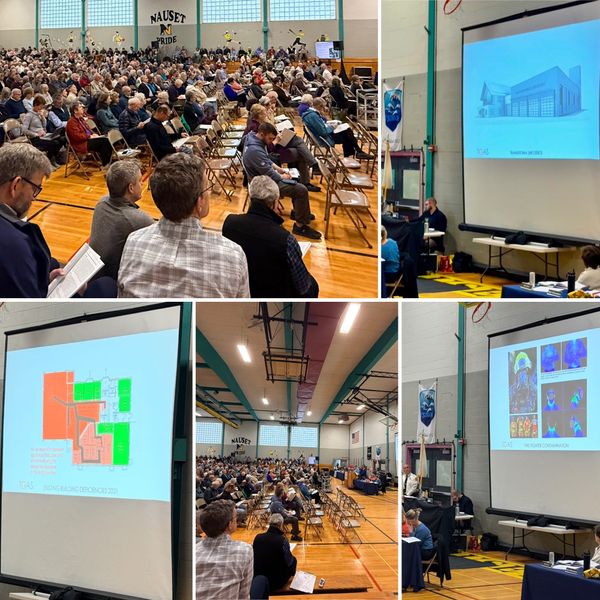
You might be a Town Meeting die-hard or a Town Meeting never-been. Either way, we hope you’ll show up — and how about bringing a friend?
Details:
When: Monday, November 16, 6 PM
Where: Nauset Regional Middle School Gym
Arriving early is never a bad idea. Registration begins at 5 PM. Check in, grab your handheld electronic voting gizmo, then find a seat and get comfy. Bring some water, maybe a snack, and your copy of the Warrant. (Printed copies are available at Town Hall.) You can watch the live-stream on Channel 1072 or see a recording later, but all votes must be cast in person.
Town staff will be available in the gym starting at 4 PM to answer Warrant questions. Even if there’s a long line of people waiting, as long as there's a quorum inside the gym, the meeting will be called to order at 6 PM sharp.
Families: Free childcare (and pizza!) will be offered for kids ages 4-13 during Town Meeting. Preregistration is required. You can do that on Rec’s sign-up page, and the deadline is Friday, November 13.
The "tiny house" trend — provoked by the national housing crisis
Articles 5-8: Amendments to Our Zoning Bylaw
Why is Zoning important?
Our zoning bylaw sets the ground rules for development in Orleans. Zoning decisions can affect a town’s economic health, housing affordability, neighborhood character, as well as access to services, health, and safety. And that’s just for starters.
The Planning Department has been systematically overhauling and updating our zoning bylaw. If you're thinking, “Wait, didn’t we just do this last year?” The answer is “Why yes, as a matter of fact, we did!” As Assistant Town Planner Elizabeth Jenkins puts it, “Zoning codes are like software — they’re always going to need updating.”
The four zoning articles on the Warrant do just that: update, streamline, clarify, and modernize various sections of the bylaw that will make it more effective — and also easier for residents, developers, and business owners to understand and use.
Article 5 replaces outdated terms (i.e., “motor inn”) and categories with newer ones (e.g., “brewery, distillery, and winery,” “artisan industry,” “coffee shop,” “tiny house”). It also replaces the decades-old table of accepted and prohibited land uses in Orleans with a new table, which is actually pretty interesting reading. One new addition to the bylaw allows “tiny houses” (400 square feet or less) in all districts except Industrial, Conservancy, and Marine Conservancy. (In case you’re new to the world of tiny houses, Instagram’s got tons to see — or you can watch a fun show about them here.)
Article 6 is a comprehensive update and reorganization of the bylaw pertaining specifically to off-street parking and loading. It adds more flexibility for pre-existing Village Center lots, expands options for Board review, clarifies dimensional requirements, and enhances landscaping requirements.
Article 7 makes adjustments to the Downtown Housing Overlay District adopted last fall. Notably, it would address some of the new code’s requirements that have proven overly restrictive in practice: for example, altering or eliminating some requirements to accommodate modular construction, and waiving the affordable housing requirement for developments that consist entirely of attainable, year-round units — with the goal of making “missing middle” housing development in the Downtown area more feasible.
Article 8 proposes further updates to definitions and language in the bylaw, as well as the option of extending Special Permits to three years. (Two is the current maximum.)
You can listen to an episode of Orleans: Behind the Scenes on the proposed changes here. The Select Board voted unanimously to support all four articles. The Finance Committee did not vote, citing no financial significance. Each of these articles requires a two-thirds majority to pass.
Articles 13 + 14: Easements
Article 13 asks voters to grant Eversource an easement for 33 Route 6A (the Jonathan Young Windmill) to replace an old electrical pole. Both the Select Board and Finance Committee were unanimous in their support. The article requires a two-thirds vote to pass.
If the above strikes you as a business item that didn’t necessarily need the full attention of Town Meeting, then you’ve got at least one thing in common with Orleans Town Counsel Karis North, who recommended the change proposed in Article 14 as a way to improve the efficiency of Town projects like this one. Instead of requiring Town Meeting approval — which is possible only twice a year — to “acquire, obtain, abandon, or relocate easements,” this article would transfer approval power to the Select Board. A couple of things of note: 1) it would only pertain to easements where no money is changing hands, and 2) re-authorization of this power would likely be sought annually in the form of an item in a consent calendar at Annual Town meeting.
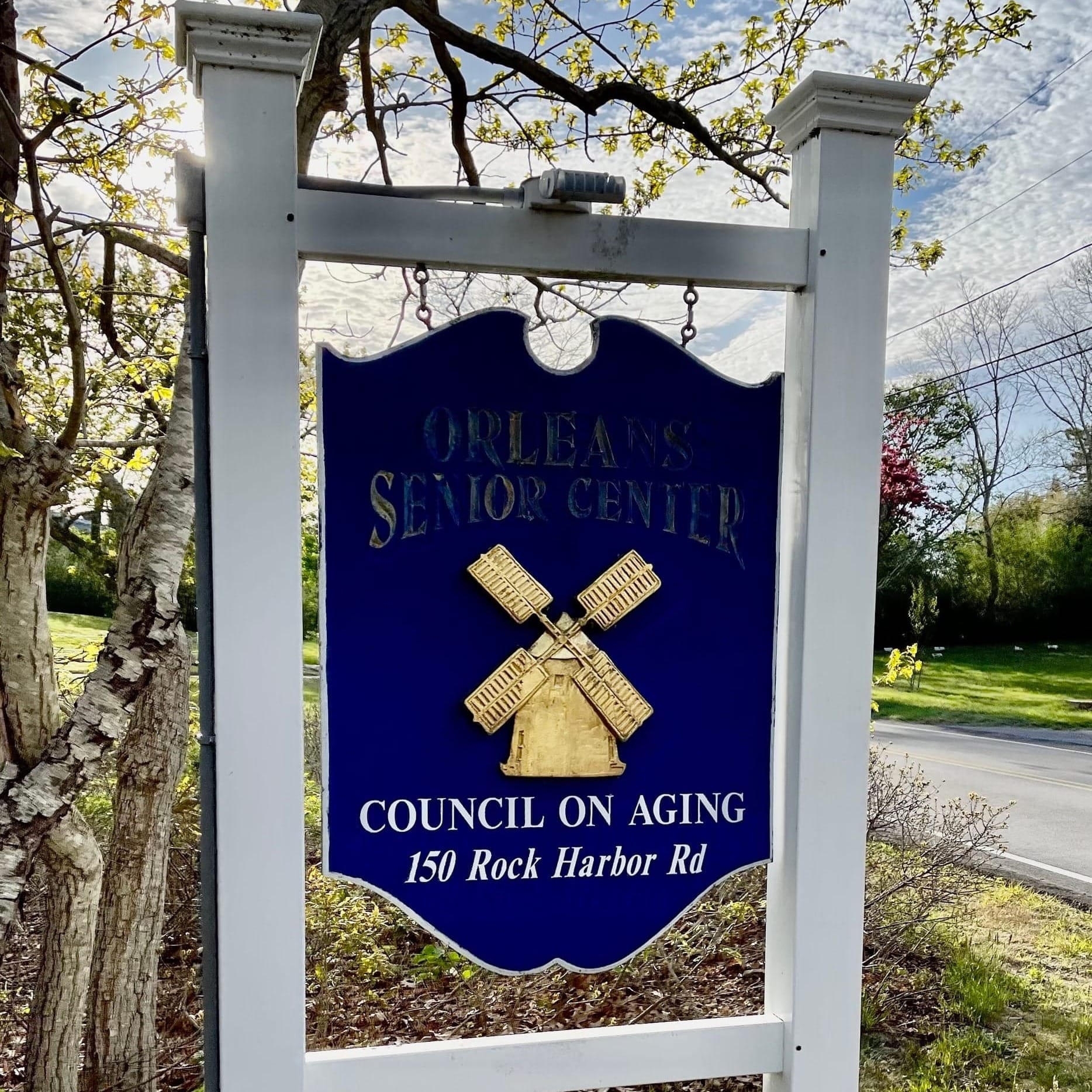
Article 17: New Generator for the COA
The Blizzard of 2026 served as a potent reminder to many of us that we aren’t as prepared as we could be for extreme weather events, which are likely to be more common in coming years. The Orleans Council on Aging/Senior Center (COA), which serves some of our most vulnerable residents, is no exception.
Article 17 asks voters to approve a major upgrade to the plan for a backup generator at the COA. How major? Half a million dollars — wowza! The good news? The generator would allow the COA to maintain operations — heating, cooling, refrigeration, communications, and more — during extended power outages like the one we experienced last February. The funds would come entirely from unspent money from earlier appropriations. Of the $500,000 needed, $335,000 would come from unspent funds allotted for previous COA improvements and repairs, and $165,000 would come from funds approved in 2022, but not spent, on HVAC repairs at Orleans Elementary School.
Both the Select Board and Finance Committee voted unanimously in support of this article. A three-quarters majority is required for it to pass because the generator was not included in a prior Capital Improvements Plan.
Our first Town-owned firehouse, built in 1925, has an unknown future
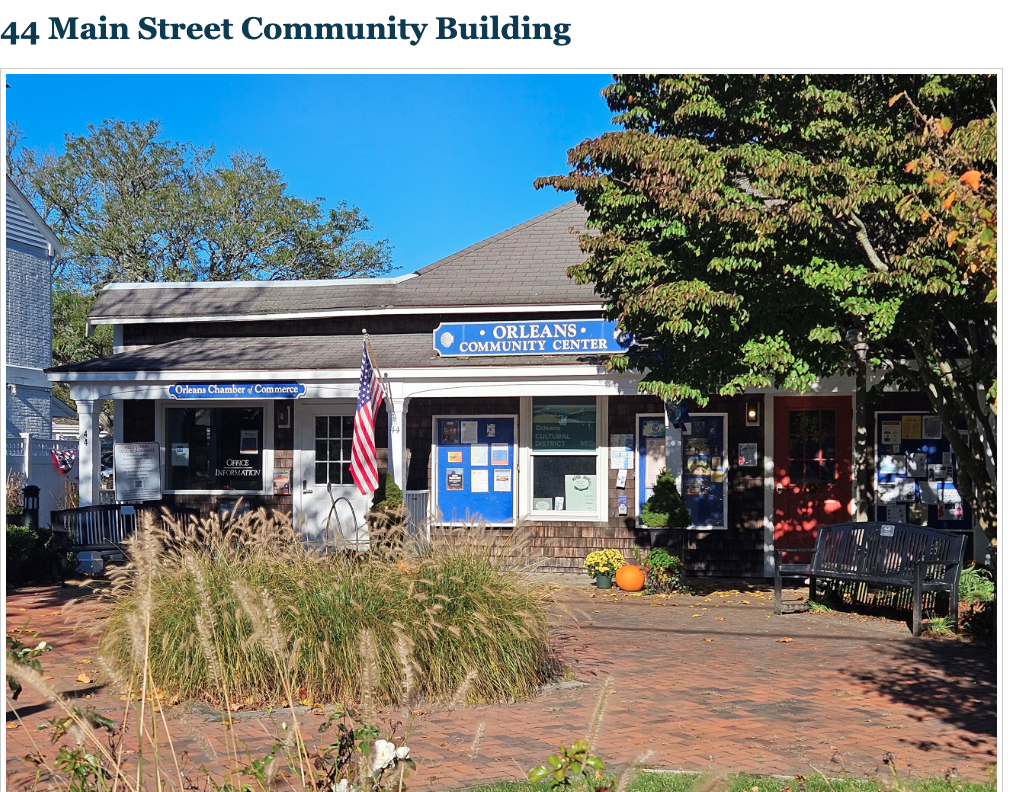
Article 19: 44 Main Street “Indefinitely Postponed" This article — asking for $450,000 from Free Cash to cover all planning and construction costs for a renovation of this Town-owned property — is in the official Warrant, but won’t be voted on at Town Meeting as described. Why? Two reasons, Kim Newman told EXIT 89. First, there hasn’t been a decision about what to use the site for, so this expenditure feels premature. Second, a comprehensive facilities assessment of all the town assets — presented to the Select Board on November 4 — prioritizes the projects for the next 20 years, and 44 Main was not deemed an urgent need. (Here’s a link to the facilities assessment presentation.)
“The last thing we want to do,” Newman says, “especially after the community generously supported our $55 million Fire Station project, is to bring another project forward that will most likely require borrowing, without doing our due diligence…The next step is for the Select Board to revisit the conversation.”
The Select Board (which had previously voted 2-3-0) agreed at their November 4 meeting to “indefinitely postpone” Article 19.
Eight groundwater wells supply drinking water to Orleans
Article 20: Water Treatment Plant Generator
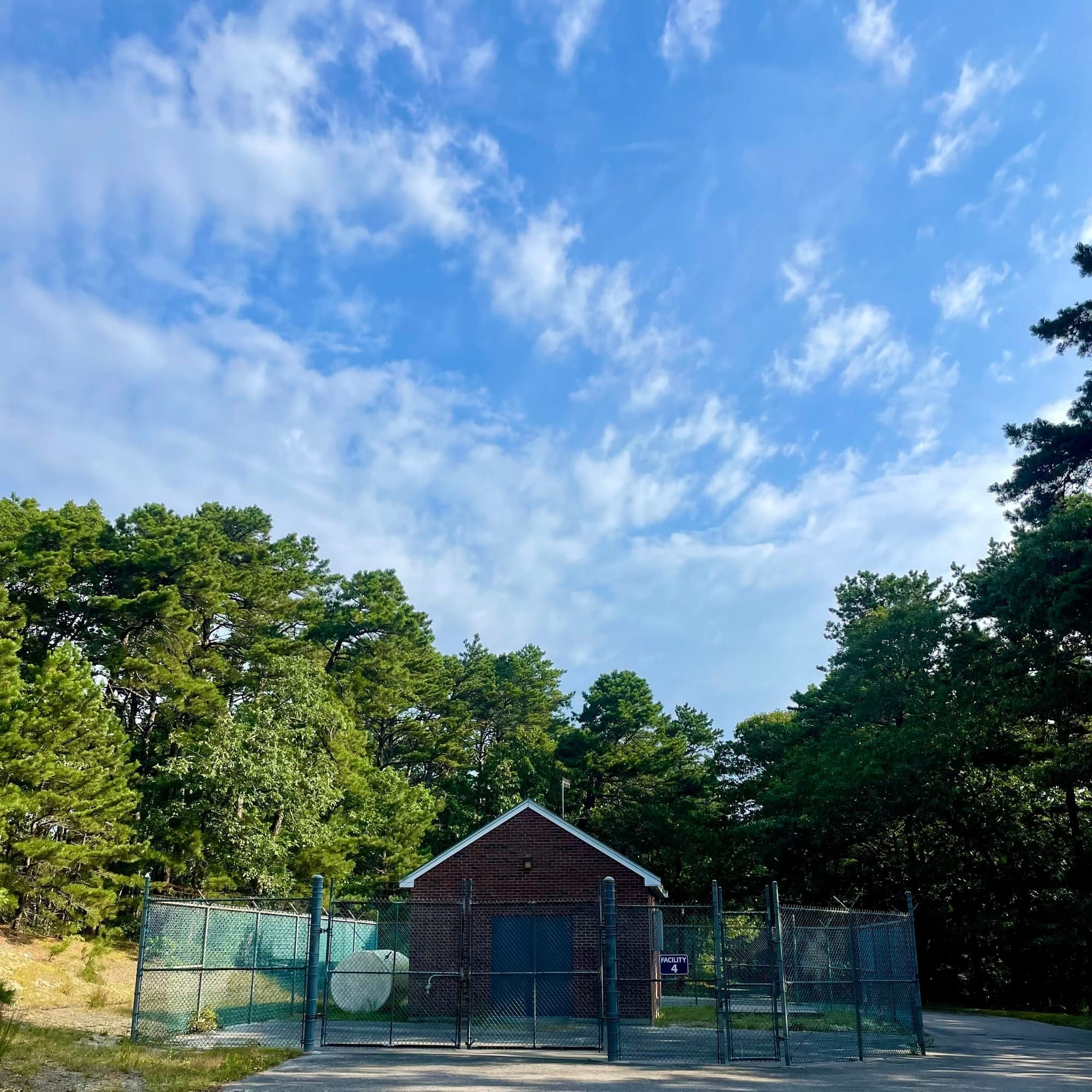
During the three-day power outage in February, the emergency generator for the Orleans Water Treatment Plant and Wells 4 & 5 had to be run manually. Nearing the end of its useful life after 22 years, the generator needs more and more oil to run. This meant that during and after the blizzard, employees of our Water and Sewer Department spent the night at the plant, getting up every few hours to stop the system, add oil to the generator, and start it up again. “We took turns,” says Water and Sewer Superintendent Sue Brown.
Pretty heroic, no?
Article 20 asks voters to approve the transfer of $722,950 from the Water Special Revenue Fund for replacement of a 450 kW Emergency Generator, including an automatic transfer switch, associated electrical equipment, installation, site work, testing, commissioning, engineering, permitting, and all other incidental and related costs. The Select Board supported this article unanimously (5-0) and the Finance Committee voted in support, with one abstention (7-0-1). A three-quarters vote is required at Town Meeting for it to pass, since the generator was not specifically identified in a prior Capital Improvements Plan.
Phase 9 + 10 of the Wastewater Saga could be unnecessary
Article 21: Good News from Pochet Marsh
Salt marshes can be beautifully self-cleaning systems, reducing their own nitrogen levels through organic processes. This is the case in Pochet Marsh (a.k.a., Pochet Neck), for which Orleans receives a 470 kilograms per year nitrogen “credit” from the Massachusetts Department of Environmental Protection (MADEP), based on a 2006 study. (These “credits” are like a coupon toward our legally mandatory pollution-reduction targets and can positively impact the permitting process too.) A 2024 hydro-analysis of the Pochet Marsh area demonstrated that the area’s nitrogen attenuation (the technical term for organic self-cleaning) is even greater than previously understood. The engineer of the study, Mike Giggey of Wright-Pierce Engineering, believes Pochet Marsh could qualify for a much larger nitrogen credit — as much as 1500 kg/yr — though an additional study is needed to prove it.
What does this mean for Orleans?
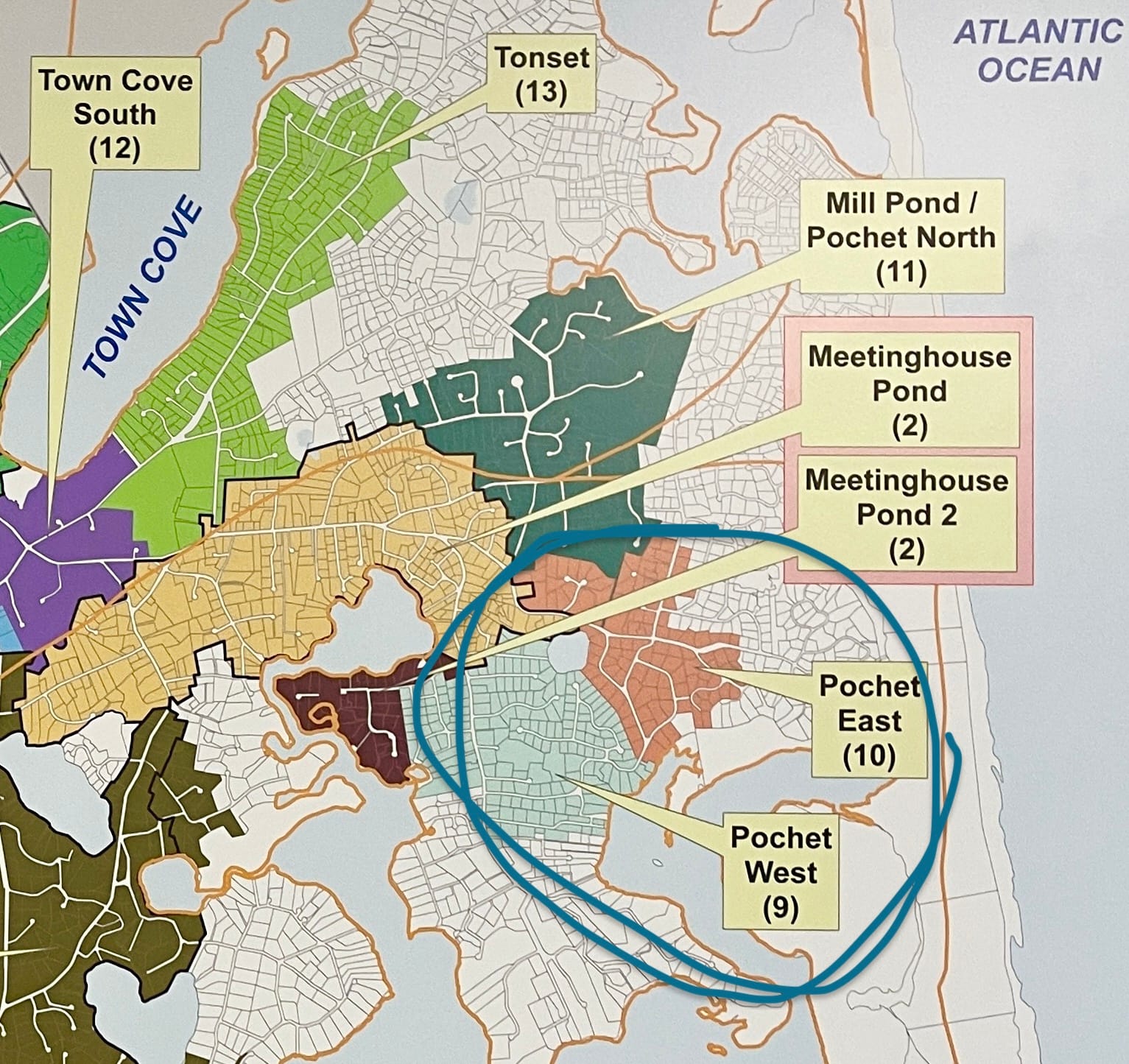
One house generates an average of 5 kilograms of nitrogen per year (5 kg/yr). If Pochet Marsh is indeed as effective at nitrogen attenuation as Giggey suspects, hundreds of properties could be spared expensive sewering. Better yet, Orleans could potentially eliminate Phase 9 (Pochet West) and possibly Phase 10 (Pochet East) from its Comprehensive Wastewater Management Plan. With each phase costing the Town "between $15-30 million, or more," according to George Meservey, Orleans Director of Planning and Community Development, this could lead to considerable savings.
Article 21 asks residents to approve a transfer from the Wastewater Stabilization Fund of $100,000 to fund the additional study. If approved, it will likely take a year to complete, according to Meservey, and require coordination with salt marsh experts at the National Seashore, and with all four towns in the Pleasant Bay Alliance. The article has unanimous support from both the Select Board and Finance Committee and needs a simple majority to pass.
Satellite view of the Nauset Estuary System (MEP Estuaries Project 2012)
Article 22: Nauset Estuary Citizen Petition
This Citizen Petition, presented by residents Charlie Carlson, Bill Amaru, and William Brotherton — and signed by 254 residents — asks voters to approve the Town of Orleans 1) submitting a formal request to the State that it work with the Town to establish Total Maximum Daily Loads (TMDLs) of nitrogen inflows for the Nauset Estuary, and 2) allocating $300,000 of Free Cash to cover Orleans’ share of the cost for the work. Let’s dig into this a bit.
What are TMDLs, and what does establishing them mean?
A TMDL, or Total Maximum Daily Load, is a number determined by the Massachusetts Department of Environmental Protection (MADEP) to be the maximum amount of a pollutant — nitrogen in the Nauset Estuary’s case — that can be received by the estuary without affecting water quality. If an ecosystem is deemed “impaired” by the U.S. Environmental Protection Agency, as several parts of the Nauset Estuary — including Mill Pond, Town Cove and Nauset Harbor in Orleans, and Salt Pond in Eastham — have been, the State is required to establish a TMDL for it. Once an ecosystem has a TMDL, the community must come up with a plan to reduce inflowing pollutants so they don’t exceed that number. A TMDL serves as a target that helps a community shape its pollution remediation strategy.
According to Carlson, one of the petitioners, without accurate TMDLs Orleans is “flying blind” when it comes to cleaning up the estuary. Not only does the Town not have a goal to work towards, he told EXIT 89, there’s no reliable way for the State to measure how much progress we’ve made so far, or make in the future.
What exactly would the $300,000 requested in the petition be used for?
According to Carlson, it would go toward the work needed to establish TMDLs, and he believes it would cover Orleans’ share. Also, he said, it would show the State that Orleans is serious. “The money is like ante-ing up in a poker game,” he says. ”It’s showing the State that Orleans is ready to move ahead.”
Is anything being done to clean up the estuary in the meantime?
Parts of Town Cove should see continued nitrogen reduction from Phase 1 of our Wastewater plan, which connected Downtown to the Wastewater Collection Facility. Town Cove could also see improvement from the permeable reactive barriers (PRBs) installed at Nauset Regional Middle School in 2016. Mill Pond has been an ongoing concern after testing revealed it to be devoid of oxygen, or “dead,” in its deepest parts. Last year, Orleans voters approved $125,000 to fund a Mill Pond Nitrogen Management Evaluation, which yielded a summary report entitled, Review of Nitrogen Control Options for Mill Pond and Its Watershed. Potential strategies for cleanup identified in the report include aquaculture (growing oysters to promote water filtration), fertilizer management, and permeable reactive barriers, as well as sewering options. A $45,000 aquaculture project is being planned there for 2027.
The Select Board voted unanimously (5-0) against supporting Article 22, with several Board members citing concerns over its impact on the Town’s current 16-phase wastewater plan. Select Board members also voiced concerns over the likelihood of Eastham contributing funds, the $300,000 not being spent soon, and the overall complexity of the TMDL process. The Finance Committee vote on the article was split — 2 in favor, 4 against, and 2 abstaining.
At the September 30th Select Board Meeting, Town Manager Kim Newman noted that that “Town Meeting cannot instruct the Select Board or Town Staff to do anything,” and if the petition were to pass, it would still be up to the Select Board to approve discussing it further or acting on it — a point that’s been made before regarding other Citizen Petitions.
A final note: The article may also be rewritten before Special Town Meeting, or at the meeting itself, on advice from the Town Moderator and Town Counsel. Stay tuned.
Tonight’s Orleans Citizens Forum at Lower Cape TV (5-7 PM at 5 Namskaket Rd) will focus on the mechanics of Town Meeting — how the Warrant comes together and the Citizen Petition process, using this article as an example. Questions will be taken from the audience. (If you miss the meeting, check the OCF website; a recording will be available soon.) You can read more about the petition in the Cape Cod Chronicle’s September 23 and October 15 issues.
Want to Go Deeper?
The Town Meeting Central page on the Town website is a great place to start. You can also check out one of the three information sessions being offered by the Town:
Tuesday, November 10 at Town Hall, 4:30–6:00 PM
Thursday, November 12 at Snow Library, 12:00–1:15 PM
Friday, November 13 at the Council on Aging, 8:30–10:00 AM
You can also:
Watch a video of the Select Board’s “Special Town Meeting Prep” at their November 4 meeting
Listen to three recent Town Hall podcasts on zoning, the capital budget, and the Town Meeting process on Orleans: Behind the Scenes
EXIT 89 is an independent publication. Our mission is to help Orleans voters make sense of town issues by providing a clear and impartial overview of the latest developments. We want to help fill the information gap, reduce the "mystery" of Town Meeting, and promote vibrant civic engagement.
Our hyperlocal digest is researched and written by journalistsMartha Sherrill and Emily Miller. Elaine Baird and Lynn Bruneau are its founding advisors. Editing, infographics, and tech support are provided by Kazmira Nedeau ofSea Howl Bookshop. In the fall of 2025, Steve Gass joined our team to help with additional research and editing.
Our digest is 100 percent free — and we aim to keep it that way. But your donations keep us going. We appreciate every single one of them. Donate securely online by clicking here. Or you can send a check to "EXIT 89" and save us a processing fee. Our address is: EXIT 89, P.O. Box 1145, Orleans, MA 02653.
If you are new to our newsletter, please take a moment tosign up for a free subscription. And if you’ve been here a while and enjoy it, please forward to a friend.
As always, we’d love to hear from you. Please share questions, comments, and ideas for future issues at hello@exit89.org.